How To Recover From A Major Career Setback | Collective Hub
What happens when you take a fall and can’t get back up?
Source: How To Recover From A Major Career Setback | Collective Hub

What happens when you take a fall and can’t get back up?
Source: How To Recover From A Major Career Setback | Collective Hub
Many events have set this election apart from others. There are many moving parts, from the mass amount of media coverage to the political polarization among the two parties. Another
Source: Professor offers stress-relieving tips for election | Life + Entertainment | theshorthorn.com
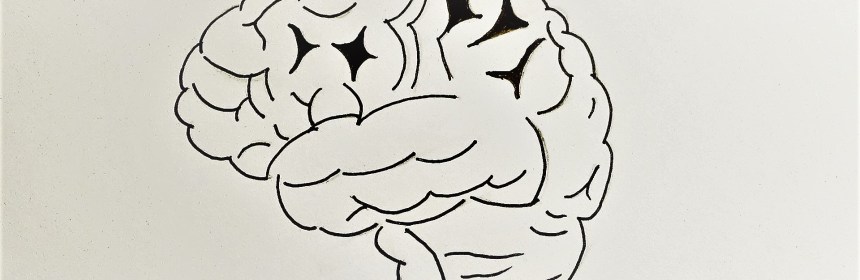
Harvard researchers at Massachusetts General Hospital find that participating in an eight-week mindfulness meditation program appears to make measurable changes in brain regions associated with memory, sense of self, empathy, and stress.
Caeden co-founder Nora Levinson says we are just starting to understand what wearable technology like Sona can do.
Source: This bracelet uses Russian cosmonaut technology to help you reduce your stress – Yahoo Sport
 “These results tell us that a person’s perceptions and emotional reactions to stressful events are more important than exposure to stress per se,”
PennState Social Science Research Institute
By Susan M. Kleiner, Ph.D.
Published in AMERICAN COUNCIL ON EXERCISE
Cortisol, whether you’ve read about it in the news media or learned about it in health classes, is often maligned as the bad stress hormone. Have you ever wondered why there would be such a potent chemical in the body that only does harm? While too much cortisol in the body can certainly have a negative effect, cortisol plays several important roles in the body that are worth knowing about. Read on to learn about the good and the bad (and yes, the ugly) effects of cortisol. Read the rest of the article here
Looking forward to reading The Upside of Stress: Why Stress Is Good for You, and How to Get Good at It by Kelly McGonigal. Here is a snippet from Stanford News
The three most protective beliefs about stress are: 1) to view your body’s stress response as helpful, not debilitating – for example, to view stress as energy you can use; 2) to view yourself as able to handle, and even learn and grow from, the stress in your life; and 3) to view stress as something that everyone deals with, and not something that proves how uniquely screwed up you or your life is.
More than ever the tech companies are starting to launch wearables that can detect heart rate variability which will give us an insight into our level of stress.
The workplace is set to change significantly in the next few years as corporations come to terms with how they can implement this new technology to maximise performance of individuals and teams.
Along with a number of other coaches I have been using this technology with great success. When coupled with emotional control it creates a platform for peak performance.
Some of the companies launching new or additional functionality are
Merlin: http://merlin-digital.com/intellisense-coherence-kit.htm
emfit: https://www.emfit.com/quantified-self
Fitbit: http://www.bbc.com/news/technology-35192737
Caeden: http://www.caeden.com/
OMSignal: http://omsignal.com/pages/omsignal-bra
Then there are the companies that have been in the market for a few years now who continue to optimise their already proven technology:
ithlete: http://www.myithlete.com/
elitehrv: http://www.elitehrv.com/
heartmath: http://store.heartmath.com/
Firstbeat http://www.firstbeat.com/ces/
Complete Coherence: http://www.complete-coherence.com/
“Stress isn’t always a bad thing; it can be handy for a burst of extra energy and focus, like when you’re playing a competitive sport or have to speak in public. But when it’s continuous, it actually begins to change your brain. Madhumita Murgia shows how chronic stress can affect brain size, its structure, and how it functions, right down to the level of your genes.” Brainfacts.org.
The results were outstanding with levels of anxiety reduced significantly. I was short on time and had many people to coach. So I implemented a program of short interventions over a 12-week period. This is what we did:
Project
Heart Rate Variability (HRV) and Presentation Anxiety
Background.
In addition to my coaching and facilitation work I also tutor and guest lecture in communication. Last semester I decided to offer free coaching to those students who suffer from presentation anxiety. This coaching had to occur at the end of the tutorial and before my next class started. So I had about 20 – 30 minutes to work with the students. Two at a time. In total I had about 14 students. Over 10 weeks.
Process.
The backbone of the coaching was HRV and how they can create physiological, emotional and consequently cognitive coherence. I also taught them basic delivery and structuring skills.
Outcome.
Learning
With groups of two people, with short interventions conducted consistently over a period of 10 weeks we can achieve physiological, emotional and behavioural change in the context of presentation anxiety.
What does this mean in a corporate context?
Presentation anxiety manifests itself in many different ways – forgetfulness, shaking and poor delivery are just some. Not only does this reinforce the anxiety associated with presenting and reducing performance in general, but the individuals personal branding could suffer which potentially limits career advancement.
Sometimes this goes untreated or is addressed by attending a general presentation skills training course, which may or may not help. Coaching may not be an option as staff may be too junior to qualify.
A solution is to conduct these mini coaching sessions in pairs over a period of 10 – 12 weeks.
We now have evidence that it is highly effective and given the time and number of coachees the ROI is high.
 Justin O'Brien